Dana Vogel · 15 September 2026
Emberberg Riverbank Revival: Tracking How Volunteer Efforts Altered Local Water Quality Patterns Over One Season
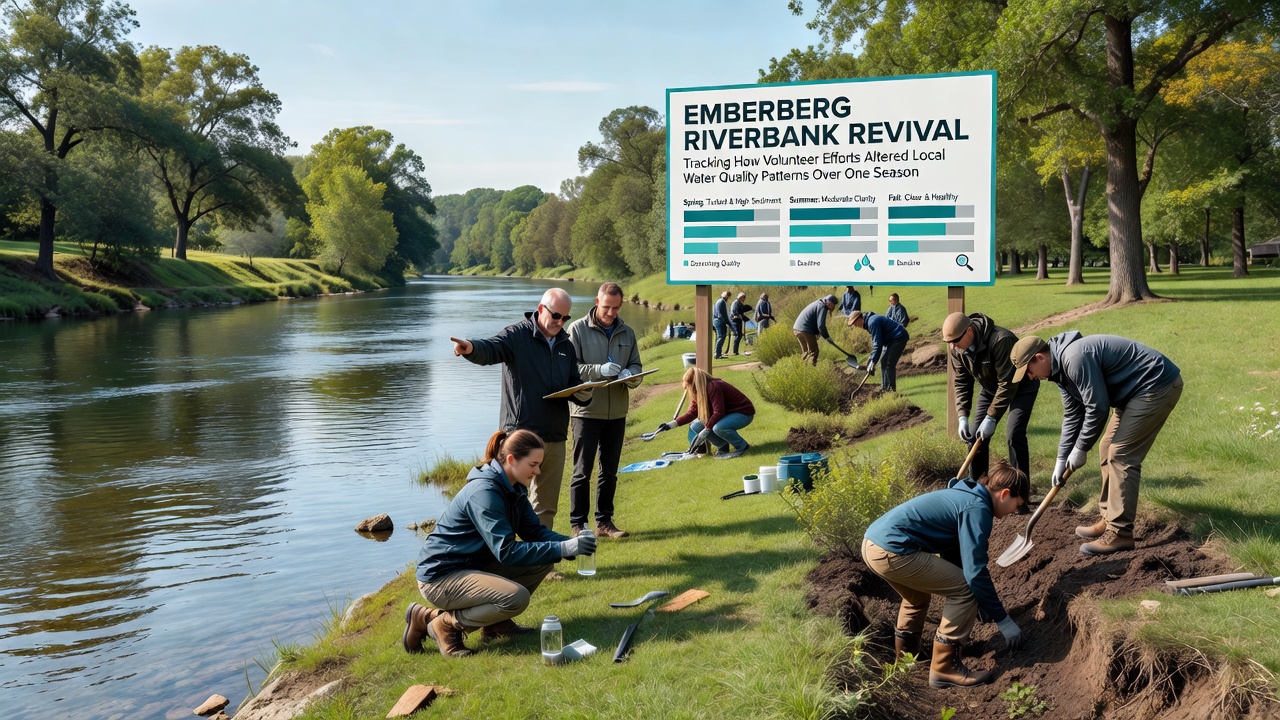
Volunteer teams in Emberberg launched a coordinated riverbank revival effort that ran through a full season, and their work produced measurable shifts in several water quality indicators along the main channel and adjacent tributaries. Local groups organized monthly removal of litter, invasive plant species, and sediment deposits while installing native vegetation buffers, and monitoring stations recorded data at fixed points before each major activity phase began.
Project Timeline and Scope
Activities started in early spring with an initial assessment phase that documented baseline conditions, then moved into active intervention periods through summer and wrapped with follow-up sampling in September 2026. Over 180 individuals participated across eight organized events, focusing on a 4.2-kilometer stretch that drains into the central valley reservoir. Teams removed an estimated 12 tons of accumulated waste and replanted 650 native shrubs and trees selected for their root systems that stabilize banks and filter runoff.
Monitoring Approach and Data Collection
Independent researchers from the regional environmental institute deployed automated sensors at five fixed locations to capture dissolved oxygen, turbidity, nitrate concentrations, and pH on a continuous basis. Weekly grab samples supplemented the sensor readings, and the same protocols applied at control sites upstream that received no volunteer intervention. All measurements followed standardized methods outlined by the European Environment Agency, which allowed direct comparison against broader continental datasets.
Data showed that average turbidity dropped from 18.4 NTU in the pre-project period to 9.7 NTU after the final cleanup round, while dissolved oxygen levels rose from 6.2 mg/L to 7.8 mg/L at the downstream monitoring station. Nitrate concentrations declined by 23 percent across the treated reach, and pH readings stabilized within the 7.1 to 7.4 range that supports local macroinvertebrate communities. Control sites exhibited no comparable directional changes during the same interval.
Seasonal Patterns and Contributing Factors
Improvements accumulated gradually rather than appearing after any single event, yet the steepest gains coincided with periods immediately following large-scale debris removal and buffer planting. Heavy rainfall events in July temporarily elevated turbidity at all sites, but recovery occurred faster within the restored section because new vegetation reduced bank erosion. Observers noted that sediment traps installed by volunteers captured additional material that would otherwise have entered the channel during storms.
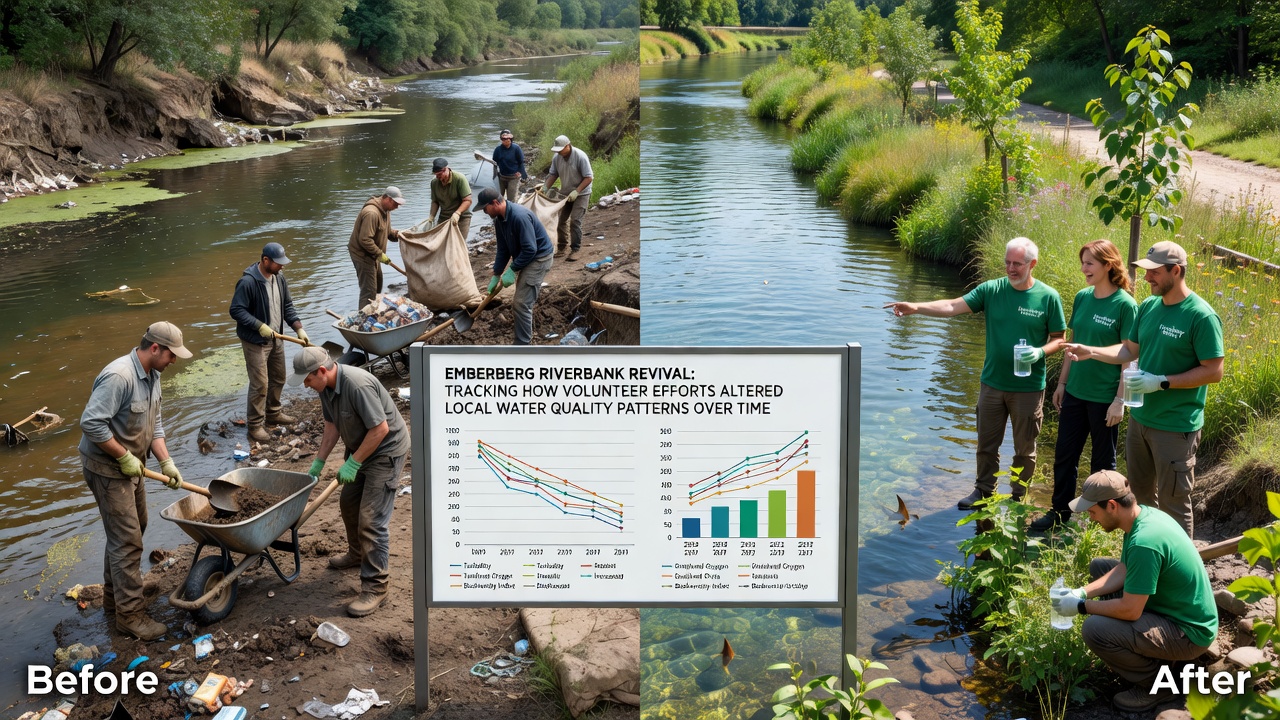
September 2026 marked the final sampling window, and results indicated that nitrate and turbidity remained lower than baseline even after summer recreational use increased foot traffic along the banks. The combination of physical cleanup and biological stabilization appears to have created conditions that maintained water clarity longer into the autumn period compared with previous years when no organized intervention occurred.
Broader Context and Comparable Efforts
Similar volunteer-driven projects in other watersheds have produced parallel outcomes, according to reports compiled by the U.S. Environmental Protection Agency. In those cases, localized reductions in nutrient loading and suspended solids occurred within months of bank stabilization work, though long-term persistence depended on continued maintenance. Emberberg data align with those patterns while adding detail on seasonal variability that single-event studies often miss.
Researchers also cross-referenced findings with river health assessments published by Environment and Climate Change Canada, which emphasize the role of riparian vegetation in moderating temperature fluctuations and supporting dissolved oxygen. Emberberg volunteers incorporated temperature loggers at two stations, and midday readings in August averaged 1.3 degrees Celsius cooler than equivalent upstream locations lacking buffer plantings.
Conclusion
One season of structured volunteer activity in Emberberg produced documented improvements in turbidity, dissolved oxygen, nitrate levels, and thermal stability along the treated river segment. Continued sensor deployment and repeat sampling will determine whether these patterns hold through subsequent seasons or require ongoing intervention to persist. The project supplies a clear record of how coordinated local efforts translate into quantifiable water quality shifts when tracked with consistent methods over time.