Dana Vogel · 13 October 2026
Emberberg Farms Confront Drought Pressures, Triggering Reviews of Festival Crowds and Transport Limitations
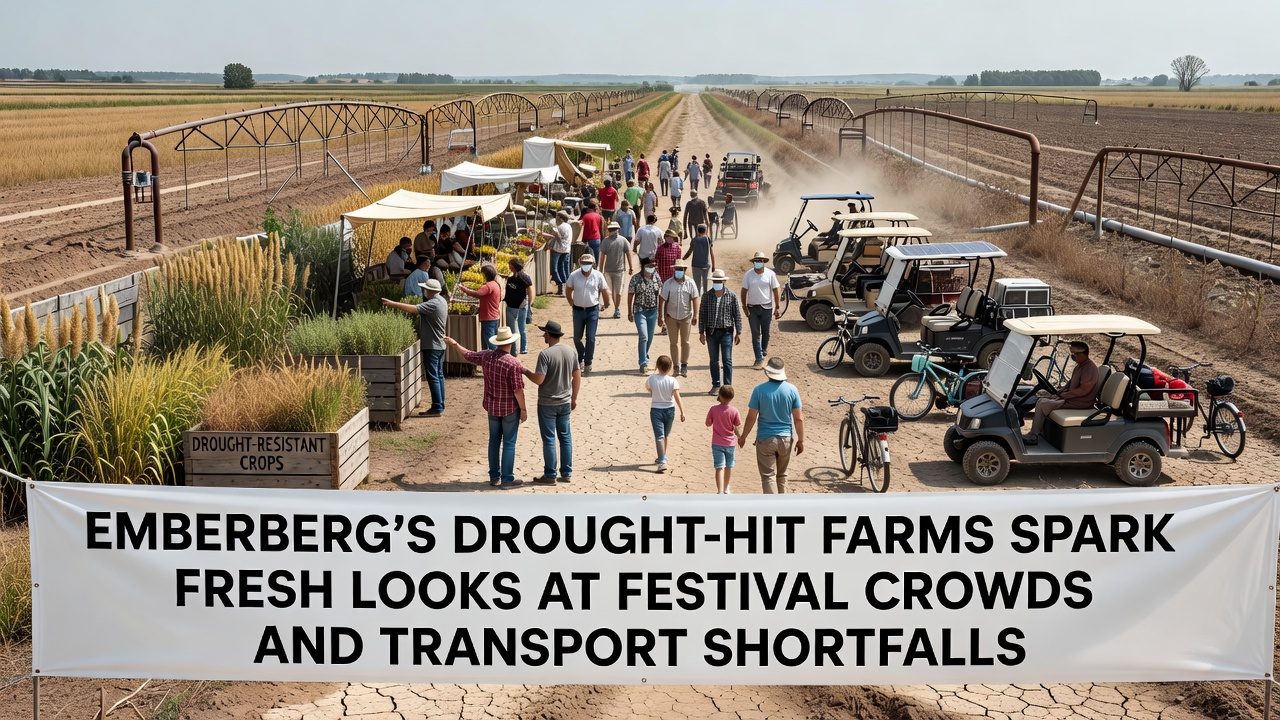
Drought conditions across Emberberg have reduced crop yields on multiple farms by measurable percentages according to local agricultural reports, and these changes coincide with increased scrutiny of how large festival gatherings affect regional transport networks. Data from monitoring stations shows precipitation levels dropped below average thresholds for three consecutive seasons, which forced many operators to adjust irrigation schedules and livestock management practices. Researchers at regional universities documented shifts in soil moisture that correlate with lower harvest volumes for staple crops like wheat and potatoes.
Agricultural Impacts Build Over Time
Farmers in Emberberg tracked water usage restrictions that began in early 2025, and these measures continued into the following year as reservoir levels remained low. Studies from the European Environment Agency indicate similar patterns across parts of central Europe, where reduced rainfall combined with higher evaporation rates strained groundwater supplies. One analysis revealed that affected farms experienced an average 18 percent decline in output compared to pre-drought baselines, prompting some producers to explore alternative crop varieties or fallow periods. Those who've monitored these trends note that the economic ripple effects extend beyond individual holdings because supply chains for local markets and processors rely on consistent volumes.
Festival Attendance Patterns Draw Attention
Annual events in Emberberg attract thousands of visitors each season, and attendance figures for 2025 events reached record levels according to organizer summaries. Crowds at music and cultural festivals generate demand for shuttle services, parking facilities, and road access that sometimes exceed existing capacity. Observers point out that peak days create bottlenecks at key intersections and rail stations, while transport operators report delays that last several hours during peak influx periods. The timing of these gatherings overlaps with harvest windows on surrounding farms, which adds complexity when drought already limits labor availability and equipment movement.
Transport Shortfalls Emerge as Key Concern
Local authorities compiled data showing that bus and rail services operated at 120 percent of scheduled capacity during major festival weekends, and this strain highlighted gaps in infrastructure planning. Figures from regional transport boards reveal that road maintenance backlogs and limited fleet sizes contribute to service interruptions, especially when weather conditions worsen. Experts examining these patterns suggest that coordination between event planners and transport agencies could mitigate some pressure points, though implementation requires updated modeling of crowd flows. A second image illustrates one of the main festival sites and its proximity to farmland access routes.
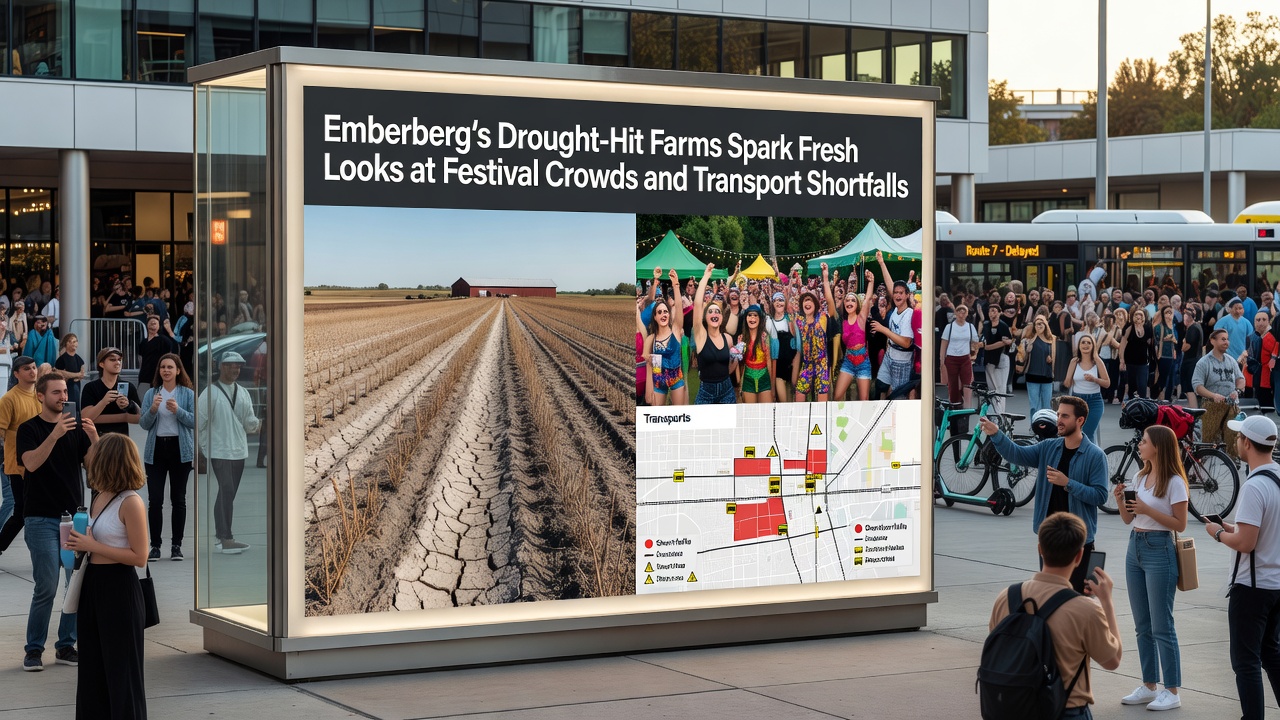
October 2026 events are already under preliminary review because organizers anticipate similar attendance numbers while drought recovery remains uncertain. Planners reference studies from the Australian Bureau of Agricultural and Resource Economics and Sciences that examined how environmental stressors intersect with tourism surges in comparable regions. Those reports emphasize the value of contingency routing and temporary capacity increases, though actual deployment depends on funding allocations and inter-agency agreements.
Integrated Planning Efforts Take Shape
Stakeholders from agriculture, tourism, and municipal services formed working groups to map overlapping challenges, and preliminary findings indicate that transport upgrades could support both farm logistics and festival operations. Data collected during 2025 events provided baseline metrics for crowd density and vehicle throughput, which researchers use to simulate scenarios for future gatherings. One case study from a comparable European site demonstrated that staggered entry times reduced peak loads by 25 percent without affecting overall attendance. People involved in these discussions highlight the need for flexible scheduling that accounts for seasonal farm demands and variable weather forecasts.
Broader Context and Ongoing Monitoring
Climate records maintained by national agencies show that Emberberg sits within a zone experiencing more frequent dry spells, and continued observation will clarify long-term implications for both farming viability and event infrastructure. Industry reports from Statistics Canada on rural transport resilience offer additional reference points for evaluating similar systems elsewhere, though local adaptations remain necessary. Monitoring programs established in 2025 continue to collect metrics on water availability, visitor numbers, and service reliability, generating datasets that inform iterative adjustments. These efforts connect disparate sectors through shared information platforms rather than isolated responses.
Conclusion
Emberberg continues to gather evidence on how drought conditions influence agricultural output while festival activities test transport limits, and coordinated assessments provide structured pathways for addressing these intersections. Ongoing data collection through 2026 will refine projections and support targeted interventions across the affected areas.